Concrete Repair & Slab Leveling (Mudjacking & Polyjacking)
A sinking driveway or sunken slab isn't always a sign the concrete itself has failed — it's often the soil underneath that has shifted, settled, or washed out, especially where Oklahoma's clay-heavy ground swells and shrinks with the weather. Left alone, an uneven driveway or walkway becomes a trip hazard and can direct water toward a foundation instead of away from it.
Options
We evaluate whether a slab is a good candidate for leveling rather than full replacement. Mudjacking pumps a cement-based slurry underneath the slab to raise it back into place, while polyurethane foam ("polyjacking") uses a lighter, fast-curing foam that expands to lift the slab with less added weight on the soil underneath. We'll walk you through which approach fits your specific slab, soil condition, and budget — and we'll tell you honestly when a section is too deteriorated to level and a partial or full replacement makes more sense.
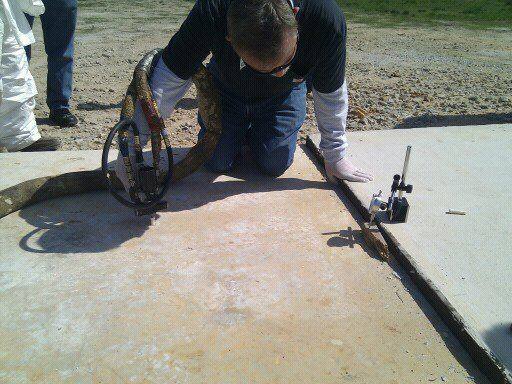
Our Process
- We inspect the slab and the surrounding soil to determine whether leveling or replacement is the right call.
- We drill small access holes in strategic locations across the settled area.
- We pump mudjacking slurry or polyurethane foam beneath the slab, raising it back to level in controlled stages.
- We patch the access holes and confirm the slab is properly supported before we leave.
Timeline
Most residential leveling jobs are completed in a matter of hours, and — unlike a new pour — the area is typically usable again almost immediately, since there's no new concrete that needs to cure.
Where We Offer This
We level and repair sunken or uneven concrete for homeowners throughout Owasso, Bixby, Collinsville, Tulsa, Claremore, Skiatook, and Jenks, Oklahoma. Owasso Concrete Pros can usually tell you over the phone whether your driveway, patio, or walkway is a good candidate for mudjacking or polyjacking — call now or request a quote online.
Frequently Asked Questions
Are you licensed and insured?
Every crew we connect your project to is required to carry the licensing and insurance their city and state require for residential and commercial concrete work. Ask for specific license and insurance details directly when you book.
What areas do you serve?
We work across Owasso, Bixby, and Collinsville, OK, plus the surrounding north Tulsa metro. Visit your city's page for local permit notes, service-area detail, and answers to questions specific to where you live.
What's the best time of year to pour concrete in Oklahoma?
Spring and fall, generally — Oklahoma's ideal pour window sits around 50-70°F. Summer heat can make concrete set too fast to finish properly, and a winter cold snap before a slab cures can cut its strength significantly. We plan around the forecast either way, but spring and fall bookings tend to fill up first.
Do you offer free estimates?
Yes — request a quote through the form on this site or call us directly, and we'll get you a free, no-obligation estimate for your driveway, patio, repair, or commercial project.
My driveway or patio is cracked and uneven — do I need a full replacement, or can it be repaired?
Not always a full tear-out. If a slab has settled or sunk but the concrete itself is still structurally sound, mudjacking or polyurethane foam leveling can often raise it back into place for a fraction of the cost of replacement. See our Repair & Leveling page for how we decide which approach fits your slab.
Do you handle both residential and commercial concrete work?
Yes. Alongside residential driveways, patios, and repairs, we also pour commercial slabs and flatwork — see our Foundations & Commercial page for details on larger-scale projects.
What's the difference between mudjacking and polyjacking, and which do I need?
Mudjacking pumps a cement-based slurry underneath the slab to raise it back into place, while polyurethane foam ("polyjacking") uses a lighter, fast-curing foam that lifts the slab with less added weight on the soil underneath. Which one fits your situation depends on your specific slab, soil condition, and budget — we'll walk you through the tradeoffs before recommending either.
Why is my driveway sinking, and does that mean it needs full replacement?
It depends on how deteriorated the concrete itself is versus just the soil underneath it having shifted — in Oklahoma's clay-heavy ground, that's a common cause of a sinking driveway. If the slab is structurally sound and it's mainly a settling issue, leveling is usually the more cost-effective fix — but we'll tell you honestly if a section is too far gone and replacement makes more sense.
How long until I can walk or park on the area after leveling?
Unlike a new pour, there's no new concrete that needs to cure, so the area is typically usable again almost immediately after we finish. Most residential leveling jobs are completed in a matter of hours.
Will the access holes you drill be noticeable afterward?
We patch every access hole before we leave. A very close look might reveal where a hole was patched, but it's a small, controlled repair compared to what a full slab replacement would involve, and we confirm the slab is properly supported before considering the job done.